The Jewel of the Ocean: How to Cook Authentic Samaki wa Kupaka
The Kenyan coast is a sensory overload. The sound of the waves, the heat of the equatorial sun, and the vibrant colors of the markets all compete for your attention. But when lunch time arrives, there is only one star of the show: Samaki wa Kupaka.
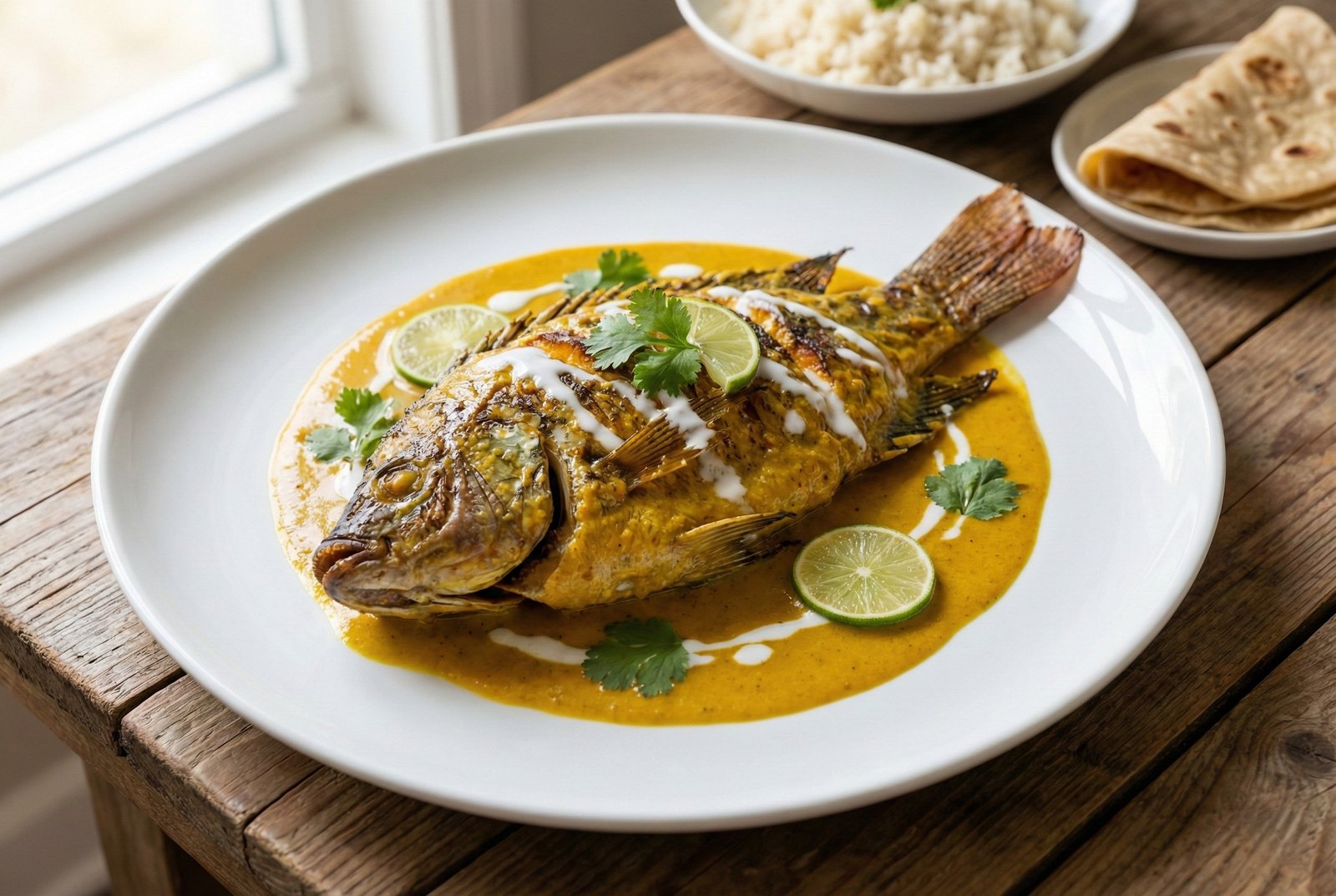
“Samaki” means fish, and “Kupaka” means to smear or coat. This dish is exactly what its name promises: a whole fish, grilled over charcoal until smoky and crisp, and then generously slathered—or smeared—with a thick, tangy, and spicy coconut sauce.
While fish curries exist all over the world, Samaki wa Kupaka is unique. It is not a stew where the fish is boiled in the liquid. It is a grill-first, sauce-later masterpiece. The sauce is reduced until it is almost like a glaze or a heavy cream, clinging to the crispy skin of the fish rather than drowning it.
For seafood lovers, this is the pinnacle of Swahili cooking. It balances the natural sweetness of fresh fish with the richness of coconut milk, the sour punch of tamarind (ukwaju), and the heat of coastal chilies. It is messy, it is bold, and it is incredibly delicious.
If you are ready to bring the flavor of the Indian Ocean to your kitchen, grab a whole Tilapia (or Snapper) and let’s get started. For those who want to skip the background and go straight to the grill, you can access our Interactive Samaki wa Kupaka Recipe & Cooking Mode here.
Table of Contents
The Fish: Why Whole is Better
You will rarely see Samaki wa Kupaka made with fish fillets. The soul of this dish lies in using a whole fish—head, tail, and bones included.
See also The Taste of Mombasa: How to Cook Authentic Kuku Paka
Why?
- Moisture: Grilling a whole fish with the bone in keeps the meat incredibly juicy. The bones act as a heat conductor, cooking the flesh gently from the inside while the skin crisps up on the outside.
- Flavor: The head and bones release gelatin and savory juices that fillets simply lack.
- Presentation: A whole, golden-yellow glazed fish arriving on a platter is a showstopper. It signals a feast.
The most common fish used is Tilapia, a freshwater fish abundant in East Africa. However, ocean fish like Red Snapper (Tewa) or Rabbitfish (Tafi) are also traditional choices along the coast. The key is to use a firm-fleshed white fish that can stand up to the heat of the grill without falling apart.
The Sauce: The “Kupaka” Factor
The magic of this dish is the sauce. It is not a thin, watery curry. It is a reduction.
The base is thick coconut milk (the first squeeze of the coconut). To this, we add a paste made from garlic, ginger, and turmeric (which gives the sauce its signature yellow hue). But the secret weapon is Tamarind (Ukwaju).
Tamarind adds a distinct sourness that cuts through the rich fat of the coconut milk and the smokiness of the fish. It provides balance. Without it, the dish would be too heavy; with it, every bite makes your mouth water.
The sauce is cooked separately in a pan until it thickens into a custard-like consistency. It is then brushed onto the fish during the final minutes of grilling. The heat of the charcoal caramelizes the sugars in the coconut and tamarind, creating a sticky, bubbling glaze that is irresistible.
The Technique: Charcoal vs. Oven
Ideally, Samaki wa Kupaka is cooked over a charcoal jiko (stove). The charcoal imparts a smoky flavor that is the hallmark of coastal street food.
However, you can achieve excellent results in a home kitchen using your oven’s broiler (grill setting).
- Bake: Roast the fish at a high temperature to cook it through.
- Broil: Switch to the broiler to char the skin.
- Glaze: Brush on the thick sauce and broil again for 2-3 minutes. This mimics the “searing” effect of the charcoal grill, bubbling the sauce and fusing it to the fish.
See also How to Make Authentic Kenyan Goat Choma (Mbuzi Choma)
Serving Suggestions
Samaki wa Kupaka is a rich main course that demands a simple, starchy side to soak up the extra sauce.
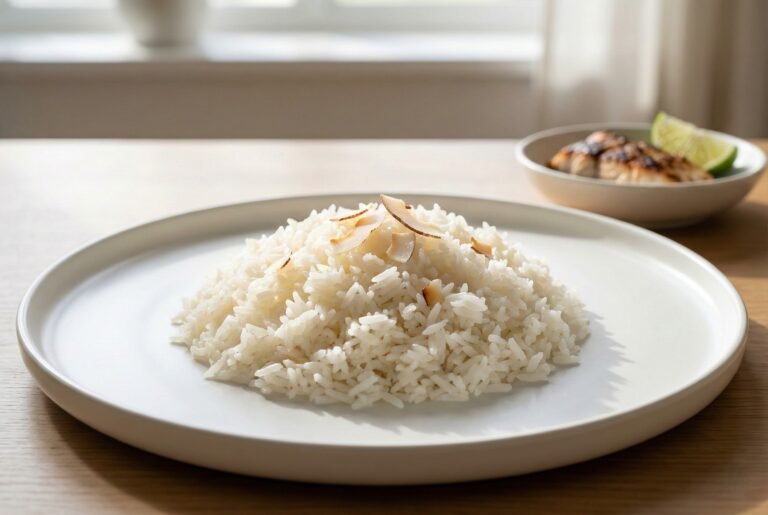
- Wali wa Nazi (Coconut Rice): The classic pairing. The subtle coconut flavor of the rice echoes the sauce without overpowering it.
- Ugali: For a more inland twist, scoop up the thick sauce and flakes of fish with a ball of stiff maize porridge.
- Simam: A stiff porridge made from cassava flour, popular in some coastal communities.
Frequently Asked Questions (FAQ)
Q: Can I use fish fillets?
A: Yes, if you must. Use thick, skin-on fillets like Snapper or Grouper. Skinless fillets (like Tilapia loins) are too delicate and may break apart on the grill or under the weight of the thick sauce.
Q: Where do I find tamarind?
A: You can find tamarind paste or blocks in Asian, African, or Latin grocery stores. If using a block (with seeds), soak a piece in warm water for 10 minutes, mash it, and strain the liquid to get the paste. Avoid sweet tamarind sauces meant for desserts.
Q: Is it very spicy?
A: Authentic Swahili food has a kick, but it is not aggressively hot. The heat comes from fresh green chilies blended into the base or a dash of chili powder. You can adjust this to your liking. The dominant flavors should be coconut and tamarind, not just fire.
Q: How do I prevent the fish from sticking to the grill?
A: Ensure your grill grates are clean and very hot before adding the fish. Oil the fish generously, not just the grate. Also, do not try to flip the fish too early—let it develop a crust first, and it will release naturally.
Ready to grill the catch of the day?
We have the exact marinade times and sauce reduction tips to ensure your fish is flaky, moist, and bursting with flavor.
See also How to Start a Secondhand Shoe Business in Kenya
Get the Full Samaki wa Kupaka Recipe & Ingredient Checklist Here
Detailed Preparation Guide
Below is an overview of the method we use to achieve that perfect coastal glaze.
The Ingredients
- Whole Fish: Tilapia or Snapper (cleaned, scaled, and scored).
- Marinade: Lemon juice, garlic, and salt.
- Coconut Milk: Thick, high-quality milk.
- Tamarind Paste: For tanginess.
- Turmeric: For color.
- Chili: Fresh or powdered.
The Process
- Score & Marinate: Make deep diagonal cuts (scores) in the fish. Rub it with lemon, salt, and garlic. Let it sit for 20 minutes.
- Pre-Cook the Fish: Grill the fish over charcoal or bake it in a hot oven until it is 80-90% cooked. The skin should be starting to crisp.
- Make the Glaze: While the fish cooks, simmer the coconut milk, tamarind, turmeric, chili, and salt in a saucepan. Stir constantly until it reduces and thickens into a heavy cream. It should coat the back of a spoon.
- The “Paka” Step: Brush this thick sauce generously over the fish on both sides.
- Final Sear: Return the glazed fish to the grill (or broiler) for 2-3 minutes. Let the sauce bubble, char slightly, and thicken further.
- Serve: Serve immediately with extra glaze on the side and a squeeze of lime.
Conclusion
Samaki wa Kupaka is more than a recipe; it is an experience. It transports you to the seaside restaurants of Malindi and the narrow alleys of Stone Town. It is a dish that celebrates the bounty of the ocean and the ingenuity of Swahili cooks.
So, fire up the heat, reduce that sauce, and prepare for a seafood feast like no other.
Start cooking now with our Official Kenyan Recipes App