The Savory Banana: How to Cook Authentic Matoke
To the uninitiated, the idea of a “savory banana stew” might sound unusual. In many parts of the world, bananas are strictly breakfast fruit or dessert. But in East Africa—particularly in Kenya and Uganda—the green plantain, known as Matoke, is a staple carbohydrate as essential as potatoes or rice.
Matoke refers to both the fruit (a specific variety of East African Highland banana) and the dish itself. When raw, these bananas are hard, green, and incredibly starchy. They are not sweet. In fact, their flavor profile is much closer to a potato or a yucca root than a cavendish banana.
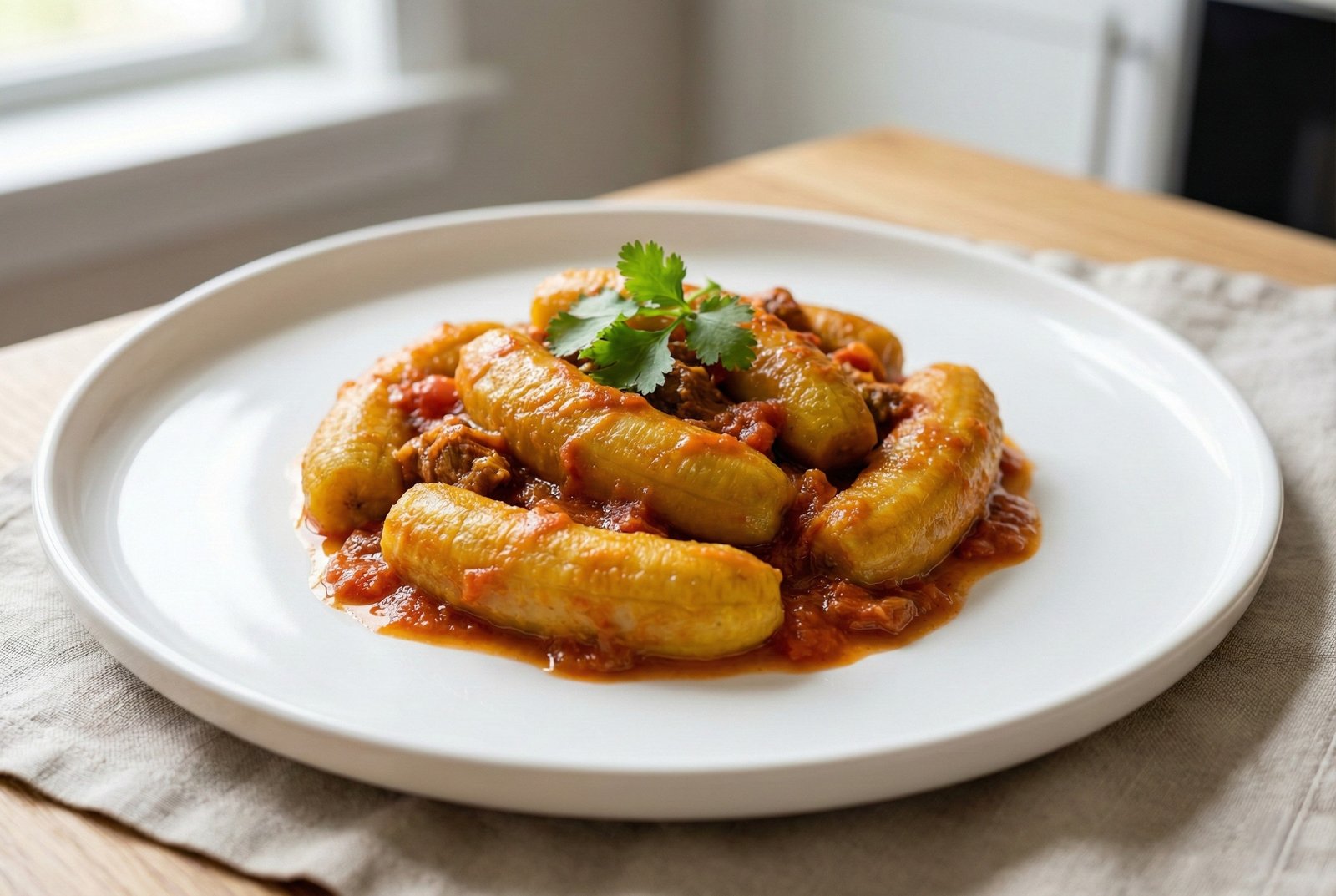
When stewed slowly in a rich tomato and coriander gravy, Matoke transforms. The starch breaks down, thickening the sauce naturally, while the fruit becomes soft, buttery, and absorbs every ounce of flavor from the pot. It is comfort food at its finest—hearty, healthy, and deeply satisfying.
If you have ever walked through a Kenyan market and seen huge bunches of green bananas and wondered what to do with them, this guide is for you. We will demystify the peeling process (the trickiest part!), the seasoning, and the technique to getting that perfect, thick stew.
For those ready to get their hands a little sticky and start cooking, you can access our Interactive Matoke Recipe & Cooking Mode here.
The Challenge: Peeling the Matoke
Cooking Matoke is easy. Peeling Matoke is the rite of passage.
Unlike a ripe yellow banana that you can unzip with your hand, raw Matoke has a tough, thick skin that is fused to the flesh. You need a knife to remove it. Furthermore, raw plantains release a sticky, milky sap that can stain your hands and clothes black.
The Pro Technique:
- Oil Your Hands: Before you even pick up a knife, rub a generous amount of vegetable oil over your hands. This prevents the sap from sticking to your skin.
- Cut the Ends: Slice off the top and bottom tips of the banana.
- Slit the Skin: Run the tip of your knife lengthwise down the ridges of the banana.
- Leverage: Use the knife blade to lift and peel back the skin in strips, similar to how you would peel a potato with a knife (not a peeler).
- Soak: Immediately drop the peeled banana into a bowl of water. This prevents oxidation (turning brown) while you peel the rest.
The Flavor Profile: Savory and Earthy
Because Matoke is a neutral starch, it acts as a flavor sponge. The traditional Kenyan preparation relies on a “fry” base (kukaanga) of red onions, tomatoes, and garlic.
While you can make a vegan version that is purely plant-based, Matoke is exceptionally good when cooked with meat. Adding cubed beef or goat meat to the stew infuses the plantains with a rich, meaty depth. The marrow from the bones seeps into the gravy, creating a meal that sticks to your ribs.
Spices are generally kept simple to let the unique flavor of the plantain shine.
- Curry Powder: A standard Kenyan pantry staple that adds warmth.
- Coriander (Dhania): Fresh cilantro is mandatory. It is usually added at the very end to provide a burst of fresh, herbal aroma that cuts through the starch.
- Tomatoes: You need plenty of ripe tomatoes. The acidity helps to tenderize the bananas and creates the base of the sauce.
Matoke vs. Potatoes
Why choose Matoke over regular potatoes?
- Texture: Matoke has a denser, creamier texture that doesn’t disintegrate as easily as potatoes. Even when soft, it retains a pleasant “bite.”
- Nutrition: Green plantains are a powerhouse of resistant starch and fiber. They have a lower glycemic index than white potatoes, providing a slower, more sustained release of energy. They are also rich in potassium.
- Flavor: There is a very subtle, earthy sweetness in Matoke that potatoes lack. It isn’t “sugary,” but it adds a complexity to savory stews that is hard to replicate.
Serving Suggestions
Matoke is often served as the main carbohydrate, but it can also be a side dish.
- With Rice: A popular combination in Kenyan households is serving the Matoke stew over white rice. It’s a “carb-on-carb” delight that is incredibly filling.
- With Chapati: The soft layers of a chapati are perfect for scooping up the thick Matoke gravy.
- On its own: A bowl of beef and Matoke stew is a complete meal in itself—protein, starch, and vegetables all in one pot.
Frequently Asked Questions (FAQ)
Q: Can I use regular yellow bananas? A: No! Regular dessert bananas will turn into a sweet, mushy mess if you try to stew them. You must use green, unripe cooking bananas or plantains found in African, Caribbean, or Asian markets.
Q: My hands are stained black from peeling. What do I do? A: The sap oxidizes quickly. If you forgot to oil your hands, scrub them with vegetable oil and salt, or use lemon juice. Soap and water alone often won’t work.
Q: How do I thicken the stew? A: The beauty of Matoke is that it thickens itself. The starch from the bananas leaches into the water as it boils. If you want it thicker, simply mash one or two of the cooked bananas against the side of the pot and stir them back in.
Q: Is Matoke gluten-free? A: Yes, it is naturally gluten-free and grain-free, making it an excellent paleo-friendly carbohydrate source.
Ready to try something new? If you are tired of the same old potatoes and rice, Matoke is the perfect way to shake up your dinner routine. We have the exact cooking times and steps laid out for you.
👉 Get the Full Matoke Recipe & Ingredient Checklist Here
Detailed Preparation Guide
Below is an overview of the method we use to create a rich, thick, and flavorful Matoke stew.
The Ingredients
- Green Plantains (Matoke): Ensure they are rock hard and completely green.
- Beef (Optional): Short ribs or stewing beef add incredible flavor.
- Tomatoes & Onions: The base of the gravy.
- Coriander (Dhania): For freshness.
- Liquid: Water or beef broth.
The Process
- Peel: Oil your hands and peel the green bananas. Soak them in water.
- Fry the Base: If using beef, brown it first. Then add onions and fry until soft.
- Add Aromatics: Add tomatoes, curry powder, and salt. Cook until the tomatoes have turned into a thick paste (this is crucial for a good gravy).
- Simmer: Add the peeled bananas and cover with water or broth. Bring to a boil.
- Cook: Reduce heat and simmer for 20-30 minutes. The bananas will turn from white to a soft yellow color.
- Thicken: Let the sauce reduce. Garnish generously with coriander before serving.
Conclusion
Matoke is a dish that rewards the adventurous cook. It transforms a humble, tough fruit into a meal that is elegant, buttery, and soulful. Whether you eat it mashed, stewed, or with a side of creamed spinach, it is a taste of the lush, green hills of East Africa.
So, grab some oil for your hands, sharpen your knife, and discover why millions of people rely on this green giant for their daily sustenance.
Start cooking now with our Official Kenyan Recipes App