The Coastal Breakfast of Champions: How to Cook Authentic Mhogo wa Nazi
Imagine waking up to the sound of waves crashing on the shore, the morning sun filtering through palm fronds, and a steaming bowl of creamy, coconut-infused root vegetables waiting for you. This is the reality of breakfast on the Kenyan coast, and the star of the show is Mhogo wa Nazi.
“Mhogo” is the Swahili word for cassava (also known as yuca or manioc), and “Nazi,” as we’ve learned, means coconut. This dish is a celebration of two of the most abundant crops in the region. It transforms the humble, starchy cassava root—often considered a “famine crop” because of its drought resistance—into something luxurious, rich, and deeply satisfying.
While in the West, cassava is often processed into tapioca pearls or flour, in East Africa, it is revered in its whole form. When stewed gently in coconut milk with a hint of turmeric, garlic, and chili, the dense root softens into a buttery, melt-in-the-mouth texture that rivals the best potato dishes in the world.
Whether you are looking for a hearty vegan breakfast, a comforting lunch, or simply a new way to utilize that strange-looking waxed root you saw at the market, this guide is for you. We will cover safety (cassava requires proper prep!), flavor balancing, and the traditional cooking method.
For those ready to start peeling and chopping immediately, you can jump straight to our Interactive Mhogo wa Nazi Recipe & Cooking Mode here.
The Cassava Challenge: Selection and Safety
Cassava is a rugged tuber with a thick, bark-like skin. Inside, the flesh is stark white and very hard. However, cassava comes with a caveat: it must be prepared correctly.
- Sweet vs. Bitter Cassava: There are two main varieties. “Sweet” cassava is what you will find in most grocery stores and markets intended for boiling. “Bitter” cassava contains higher levels of cyanide-producing compounds and requires extensive processing (soaking, fermenting) to be safe. Always buy cassava from a reputable grocer who sells the sweet variety for cooking.
- The “Woody” Core: Running through the center of every cassava root is a tough, fibrous string (vascular bundle). This does not soften when cooked. You must split the cassava chunks in half and remove this woody spine before cooking, or you will have an unpleasant, chewy surprise in your soft stew.
- Signs of Spoilage: When you cut into a cassava root, the flesh should be brilliantly white. If you see grey streaks, black spots, or brown veins running through the flesh, discard that section or the whole root. These are signs of oxidation and spoilage that will ruin the flavor.
The Magic of Coconut Milk Reduction
Mhogo wa Nazi is technically a stew, but it is not “soupy.” The goal is a thick, creamy coating that clings to every chunk of cassava.
This is achieved through reduction. You start with a significant amount of liquid—a mixture of water and coconut milk (or “thin” milk). As the cassava boils and softens, it releases starch into the liquid, acting as a natural thickener.
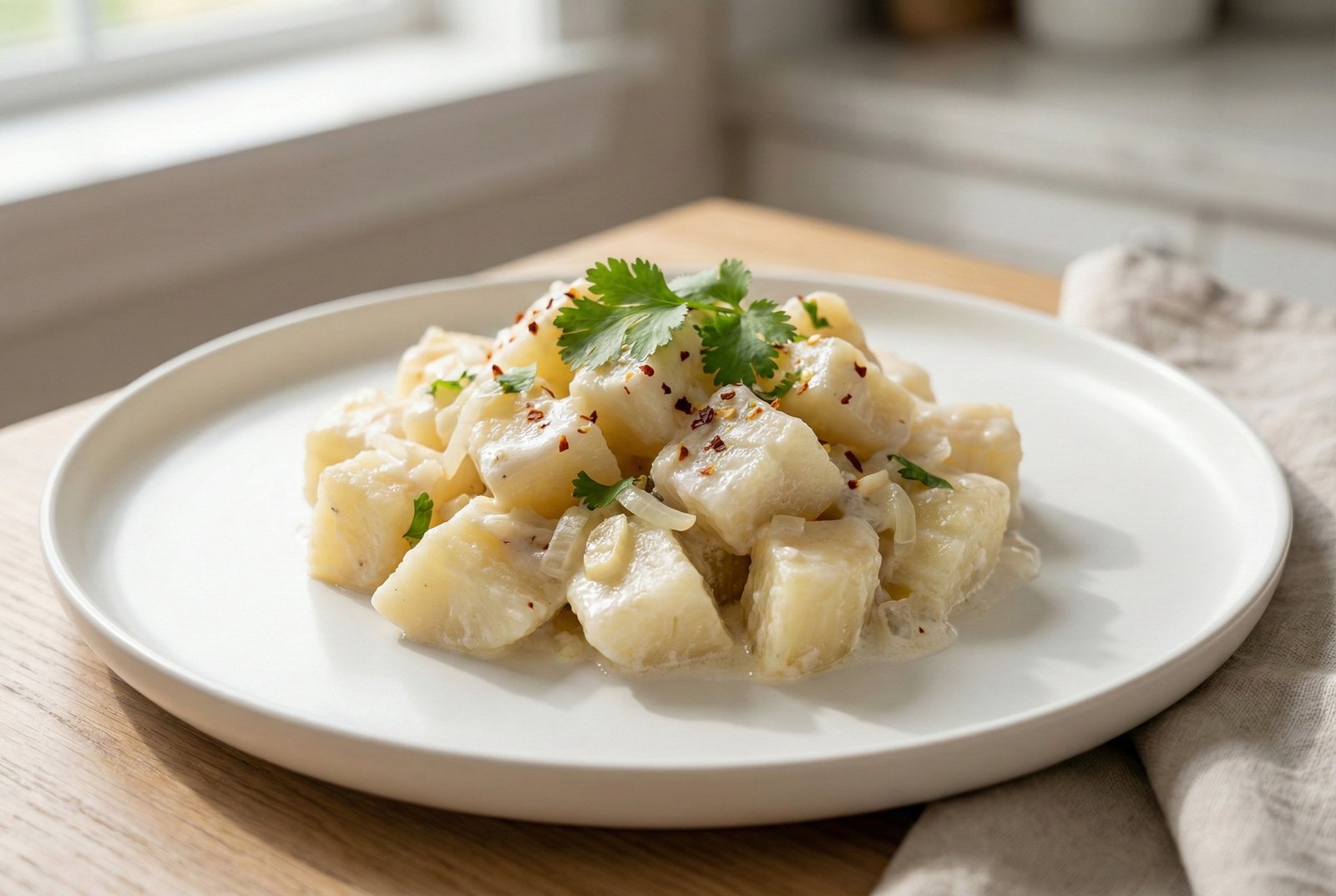
Towards the end of the cooking process, you remove the lid. This allows the excess water to evaporate, leaving behind the rich coconut oil and solids. The sauce transforms from a white broth into a glossy, yellow-tinted cream (thanks to the turmeric). The result is savory, slightly sweet, and incredibly rich.
Flavor Variations
The base recipe is simple: Cassava, Coconut Milk, Onion, and Salt. However, every Swahili household has its own twist.
- The “Yellow” Version: Adding ground turmeric turns the dish a beautiful golden color and adds an earthy warmth. This is the most popular street food version.
- The Spicy Version: A whole green chili (pilipili) is often thrown into the pot. It is usually left whole or just slit slightly, imparting a subtle heat without making the dish fiery hot.
- With Meat: While traditionally vegetarian, some cooks add pieces of beef or dried fish to the stew for extra protein, though the pure coconut version remains the favorite for breakfast.
Serving Suggestions
Mhogo wa Nazi is heavy and filling, so it is often served as a standalone meal.
- Breakfast: Served with a cup of hot spiced tea (Chai Tangawizi), it provides enough energy to last until dinner.
- Lunch/Dinner: It pairs beautifully with a side of grilled fish (Samaki) or a light tomato salsa (Kachumbari) to cut through the richness of the coconut fat.
- Chili Paste: A side of Pilipili ya Kukaanga (fried chili paste) is essential for heat lovers.
Frequently Asked Questions (FAQ)
Q: Is cassava healthier than potatoes? A: Cassava is higher in calories and carbohydrates than potatoes, making it an excellent energy source. It is also a good source of Vitamin C, thiamine, and folate. It is naturally gluten-free and grain-free (Paleo/AIP friendly).
Q: Can I use frozen cassava? A: Yes! In fact, frozen cassava is often safer and more convenient for beginners. It comes pre-peeled and usually has the woody core removed. You can put it straight into the pot from the freezer (just add a few minutes to the cooking time).
Q: How do I peel fresh cassava? A: Treat it like a pumpkin, not a potato. Cut off the ends, then cut the root into 3-inch cylinders. Stand a cylinder up and use a sharp knife to slice off the thick brown skin and the thin pinkish layer underneath, revealing the white flesh. Do not use a vegetable peeler; it’s not strong enough.
Q: Why is my sauce thin? A: You likely added too much water or didn’t boil it long enough with the lid off. Remove the lid, increase the heat to medium-high, and watch it closely. As the water evaporates, the sauce will thicken rapidly.
Ready to try the tropical tuber? We have laid out the exact cooking times and coconut-to-water ratios to ensure your cassava comes out buttery soft, never hard or stringy.
👉 Get the Full Mhogo wa Nazi Recipe & Ingredient Checklist Here
Detailed Preparation Guide
Below is an overview of the method we use to create a rich, thick, and flavorful cassava stew.
The Ingredients
- Cassava: Fresh or frozen. If fresh, ensure it is pure white inside.
- Coconut Milk: Full-fat is best for that creamy texture.
- Onion & Garlic: The aromatic base.
- Turmeric: For that signature golden color.
- Chili: Optional, for a kick.
The Process
- Prep: Peel the cassava thoroughly. Split the logs in half lengthwise and remove the tough string from the center. Cut into bite-sized chunks.
- Combine: Place the cassava, sliced onions, crushed garlic, turmeric, salt, and chili in a wide pot.
- Liquids: Add enough water to cover the cassava halfway. Add the coconut milk to cover the rest.
- Boil: Bring to a boil, then cover and simmer on medium heat.
- Check: After 20 minutes, test a piece with a fork. It should slide in easily. The cassava should be starting to crack open.
- Reduce: Remove the lid. Let it boil vigorously for another 5-10 minutes. The liquid will reduce, and the starch from the cracking cassava will thicken it into a heavy sauce.
Conclusion
Mhogo wa Nazi is comfort food with a tropical soul. It is a dish that proves you don’t need expensive ingredients to create something luxurious. The magic lies in the alchemy of starchy root and creamy coconut.
So, head to your local market, find a good firm root (or grab a bag from the freezer aisle), and treat yourself to the breakfast of the Swahili coast.
Start cooking now with our Official Kenyan Recipes App