
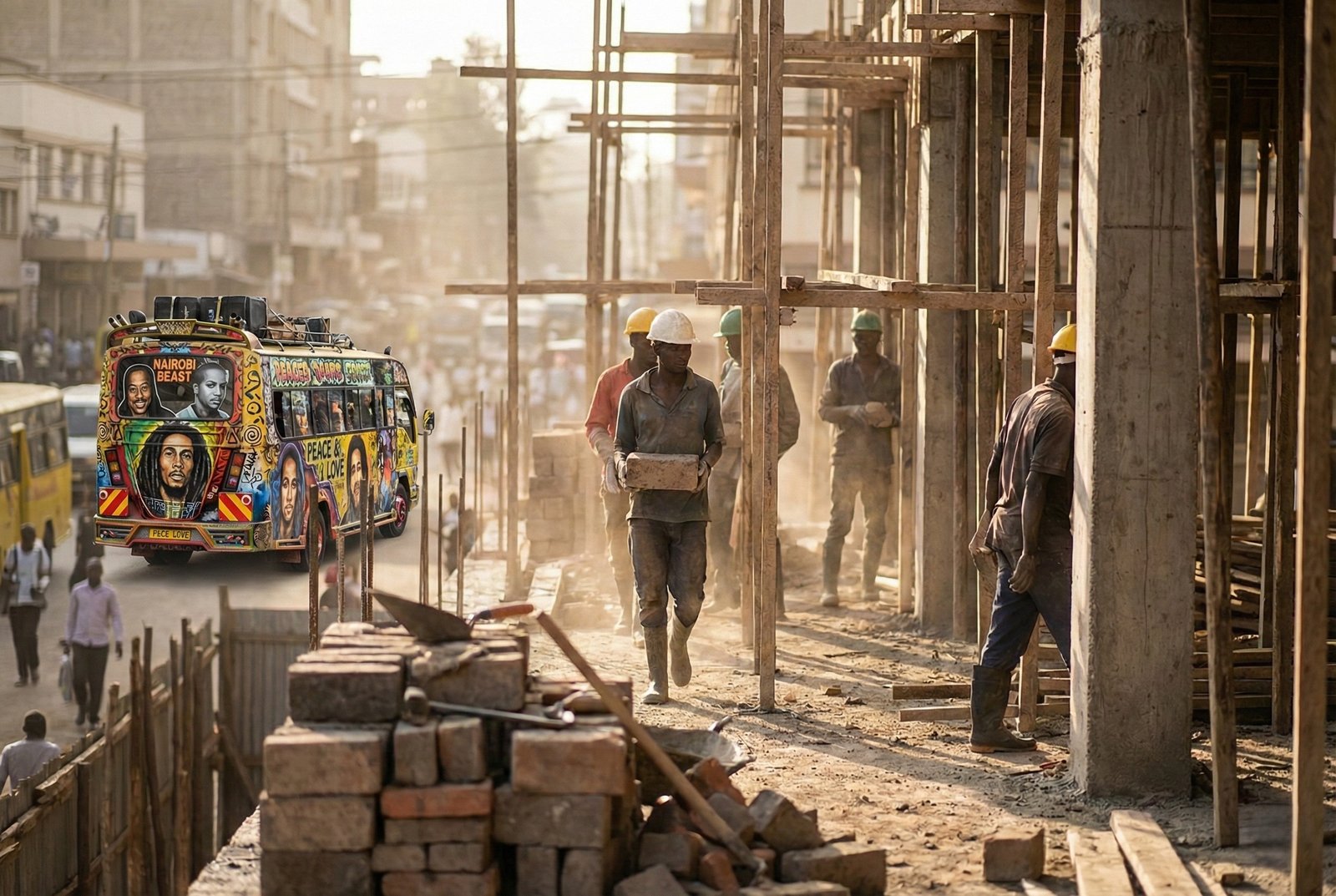
Stop Getting Cheated by Fundis: The Ultimate Guide to Mjengo Material Estimates in Kenya
Stop Getting Cheated by Fundis: The Ultimate Guide to Mjengo Material Estimates in Kenya
If there is one thing that unites us as Kenyans, it is the dream of owning a home. We are truly a “Jenga Nation.” Whether it’s a simple perimeter wall in Ruai, a set of rentals in Rongai, or a dream home upcountry, the sound of a mixer and the smell of wet cement is the soundtrack of progress. To keep that progress on track, you need the Jenga Material Estimator.
But let’s be honest: Mjengo can be a headache.
For many aspiring homeowners, the excitement of breaking ground is quickly replaced by the anxiety of the budget. Stories of materials disappearing at night, cement bags growing legs, and, most commonly, fundis (contractors) providing wildly inflated quotes are all too familiar.
“Boss, leta mchanga lorry tatu na simiti mifuko mia,” (Boss, bring 3 lorries of sand and 100 bags of cement) they say. But do you really need that much? Or are you funding the fundi’s side hustle?
This is where the concept of a “Sanity Check” comes in. Before you buy, you need to calculate.
The “Fundi Math” Problem
We all respect a good fundi. A skilled mason is worth their weight in gold (or steel). However, even honest fundis often use “rule of thumb” estimates that lean heavily on the side of over-buying to avoid running out. Dishonest ones? Well, they over-quote to skim off the top.
The gap between what is actually needed and what is quoted is where your budget bleeds.
Common schemes include:
• Overestimating Cement: Asking for a 1:3 ratio mix when a 1:4 or 1:5 is standard for walling.
• The Sand Game: Ordering a “lorry” of sand without specifying tonnage or volume.
• Stone Breakage: exaggerated claims about how many stones broke during transit.
To protect your wallet, you need data. You need the Jenga Material Estimator.
Introducing the Jenga Material Estimator: Your Mjengo Companion
We realized that Kenyans didn’t need complicated architectural software; they needed a simple, accessible calculator to verify quotes on the fly.
The Concept is simple: A sanity-check tool for home builders.
User Input: You simply say, “I want to build a wall that is 20ft long and 8ft high.”
The App Says: “You need approximately: 350 Machine Cut Stones, 4 Bags of Cement, and 1 Lorry of Sand.”
It bridges the gap between technical construction knowledge and the layman paying the bills.
How to Estimate Materials Like a Pro
Understanding how the calculator works helps you argue your case when the quote looks suspicious. Here is the breakdown of the three main components of any walling project in Kenya.
1. Machine Cut Stones (Ndarugo)
The standard building block in Kenya today is the machine-cut stone, typically sourced from quarries like Ndarugo.
• 9-inch Stones: Used for perimeter walls and external load-bearing walls.
• 6-inch Stones: Used for internal partitions.
The Calculation:
A standard stone measures roughly 15 inches by 9 inches. When you add a 1-inch mortar joint (the cement between stones), one stone covers about 1.11 square feet.
• Sanity Check: If your wall is 100 square feet, you technically need about 90 stones. However, always add a 5% wastage factor for breakage during offloading and cutting.
2. The Cement Ratio
This is the most controversial part of any mjengo. How many stones can one bag of cement lay?
If a fundi tells you one bag lays 20 stones, fire them.
If they say 80, the wall will fall down.
The Golden Standard:
• For 9-inch stones, one bag of cement (50kg) should comfortably lay 40 to 45 stones.
• For 6-inch stones, one bag can stretch to 55 to 60 stones.
Knowing this ratio alone can save you dozens of bags of cement on a large project.
3. River Sand: Tons vs. Lorries
Sand is tricky because it is sold by volume (lorry size) but often calculated by weight (tons).
A standard construction mix (mortar) usually requires about 0.35 tons of sand per bag of cement.
The problem arises at the hardware or quarry. You order a “Canter,” but is it a 3-ton or a 7-ton tipper?
Our Jenga Material Estimator calculates the tonnage first, then converts it into “Canter/Lorry” loads (assuming a standard 7-ton capacity) so you can visualize the delivery.
“Jenga Wisdom”: Tips for a Smooth Project
Beyond the math, successful construction requires street smarts. Here are a few tips embedded in our app to keep you safe:
1. “Buy water first! A dry site is a stalled site.”
Before you drop a single stone, ensure you have water storage. Cement requires water to cure. No water means your fundis sit idle while you pay them daily wages.
2. “Always count the stones as they offload, not after.”
Transporters are notorious for short-changing clients. If you paid for 800 stones, count them as they come off the truck. Once they are in a pile, it is impossible to verify.
3. “Cheap is expensive.”
A fundi charging 500 bob per day might seem cheaper than the one charging 1000 bob, but if the cheap one wastes 20 bags of cement and builds a crooked wall, you have lost much more than you saved.
4. “Cement doesn’t wait for anyone.”
Don’t buy 100 bags of cement if you only have the labor to use 10 per day. Cement absorbs moisture from the air and hardens (it “dies”). Buy in batches.
Why You Should Use the Jenga Material Estimator
Construction materials in Kenya are at an all-time high. A single machine-cut stone averages KES 50-60. A bag of cement hovers around KES 750.
If you are building a standard 50ft by 100ft plot perimeter wall, a calculation error of just 10% could cost you over KES 20,000.
Use our tool to:
• Verify Quotes: When the fundi gives you a shopping list, run the numbers. If they are asking for double what the app says, ask questions.
• Plan Your Budget: Toggle the price settings in the app to match your local hardware store prices and get an instant cost estimate.
• Reduce Wastage: Buy exactly what you need, with just enough buffer for safety.
Build Smart, Build Safe
We believe in a transparent Jenga Nation. Information is power. By knowing your numbers, you command respect at the construction site and ensure your hard-earned money goes into the building, not into the waste pile.
Ready to start your project?
Try the Jenga Material Estimator today on Tujulishane and take the guesswork out of your mjengo.
Disclaimer: These estimates are for sanity-checking and budgeting purposes only. Actual material needs may vary based on specific site conditions, workmanship, and structural engineering requirements.