How to Start a Samosa Production Business in Kenya (Supplying Cafes & Eateries)
Introduction
The samosa business in Kenya is a reliable and profitable food hustle that works in almost every town and estate. Samosas are a favorite snack among Kenyans — enjoyed in cafés, hotels, schools, offices, and at home with tea. With their delicious taste, long shelf life compared to other snacks, and affordable price, samosas are always in demand. Starting a samosa production business allows you to supply directly to cafés, eateries, schools, and individuals while building steady daily income.
Startup Costs 💰
The costs depend on the scale of production, but you can start small from home.
- Capital Needed: KES 10,000 – 25,000
- Key Expenses:
- Ingredients (flour, meat, potatoes, spices, onions, coriander) — KES 3,000 – 6,000
- Cooking oil — KES 2,000 – 5,000
- Cooking equipment (sufurias, frying pans, jiko/gas) — KES 3,000 – 7,000
- Packaging materials (boxes, trays, foil papers) — KES 1,000 – 3,000
- Branding & marketing — KES 500 – 1,000
💡 Tip: Start by supplying small shops and cafés, then expand into supermarkets or frozen samosa packs.
Why This Business Works ✅
- Daily Demand: Samosas are eaten for breakfast, lunch, and evening tea.
- Affordable Snack: Popular with students, workers, and families.
- Easy to Start: Requires basic cooking skills and equipment.
- Flexible Market: Sell directly to consumers or supply in bulk.
- Scalable: Can grow into a full catering or frozen food business.
Step-by-Step Setup 🛠️
1. Learn the Recipes
- Meat samosas (beef, chicken, mutton).
- Vegetable samosas (potatoes, peas, spinach).
- Experiment with spices for unique taste.
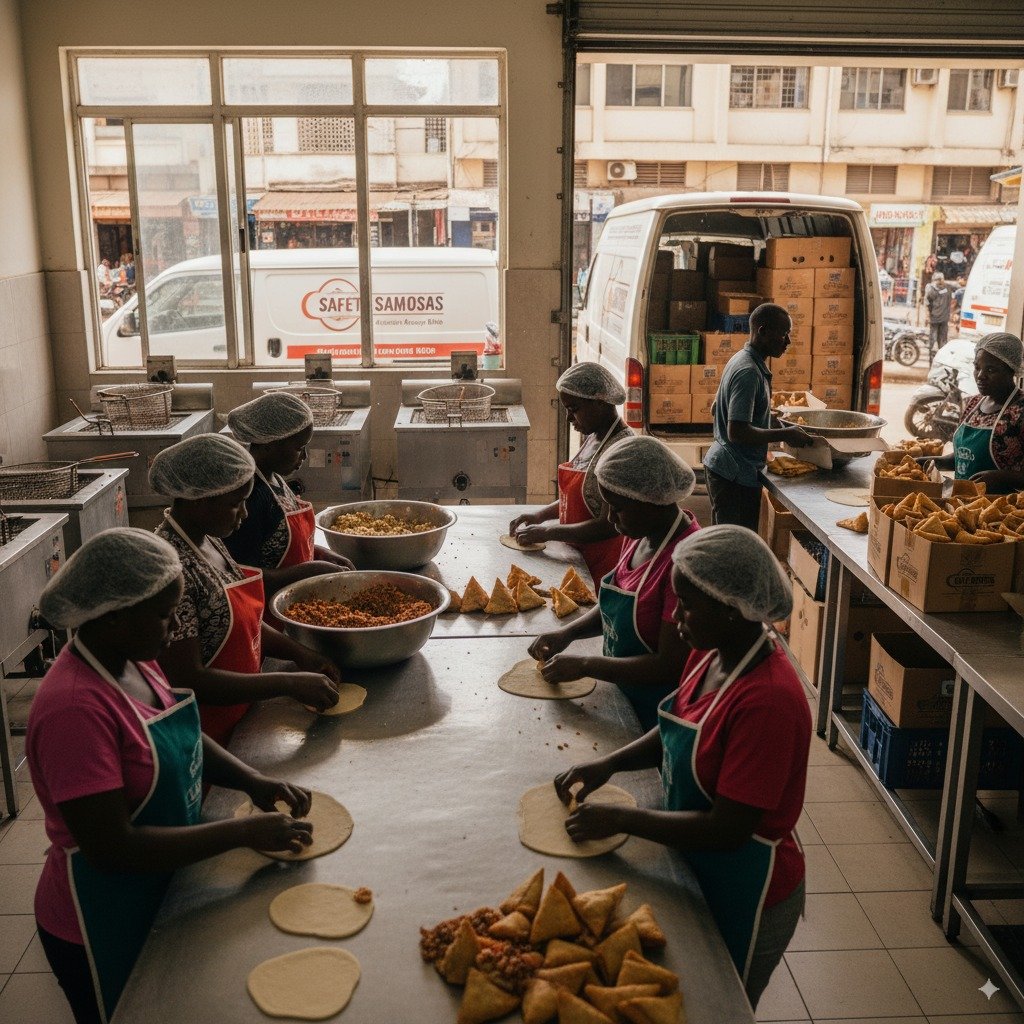
2. Prepare the Dough & Fillings
- Make thin chapati-like dough for pockets.
- Cook meat/vegetable fillings with onions, garlic, and spices.
3. Fry & Package
- Deep fry in clean cooking oil until golden brown.
- Package neatly in trays, foil paper, or boxes.
4. Identify Your Market
- Cafés and small hotels.
- Schools, offices, and bus stages.
- Events (weddings, birthdays).
- Direct orders from estates.
5. Set Prices
- 1 meat samosa: KES 30 – 50
- 1 vegetable samosa: KES 20 – 30
- Bulk supply (100 pieces): KES 2,500 – 4,000
Profit Breakdown 📊
Example:
- Cost to make 100 vegetable samosas = ~KES 1,500.
- Sell at KES 25 each = KES 2,500.
- Profit = KES 1,000 per batch.
Meat samosas:
- Cost to make 100 = ~KES 2,500.
- Sell at KES 40 each = KES 4,000.
- Profit = KES 1,500 per batch.
👉 Supplying 500 samosas weekly = KES 5,000 – 7,500 profit.
👉 Monthly = KES 20,000 – 30,000+ (part-time).
With higher production (1,000+ per week), profits can exceed KES 60,000 monthly.
Challenges & How to Overcome Them ⚠️
- High Oil Costs: Cooking oil prices affect profits.
- Solution: Buy in bulk and manage frying temperatures.
- Market Competition: Many people sell samosas.
- Solution: Stand out with flavor, neat packaging, and reliability.
- Perishability: Samosas spoil if not stored well.
- Solution: Sell fast or freeze for resale.
- Labor Intensive: Rolling, filling, and frying takes time.
- Solution: Involve helpers and streamline production.
Tips to Grow 🚀
- Supply frozen samosas to households and supermarkets.
- Offer variety: chicken, beef, cheese, or spicy samosas.
- Partner with schools, offices, and events for bulk orders.
- Expand into catering services.
- Brand your business with a catchy name like “Samosa Delight Kenya.”
Frequently Asked Questions (FAQ) ❓
Q: How much capital do I need to start a samosa business in Kenya?
A: With KES 10,000 – 25,000, you can buy ingredients, equipment, and packaging to begin production.
Q: How profitable is samosa production?
A: Profits range from KES 1,000 – 1,500 per 100 samosas. Monthly earnings can exceed KES 60,000 with bulk supply.
Q: Can I supply samosas to supermarkets?
A: Yes, but you need neat packaging and KEBS certification.
Q: Which samosas sell best?
A: Beef samosas sell most, but vegetable options attract schools and health-conscious buyers.
Conclusion
The samosa production business in Kenya is a reliable and profitable food hustle that requires moderate capital and basic cooking skills. With KES 10,000 – 25,000, you can produce and supply samosas to cafés, schools, and offices while growing into frozen packs or catering services. With quality, neat packaging, and consistency, this hustle can expand into a full food production business.
👉 Explore more hustler-friendly opportunities in the Business Ideas Hub — with over 50+ small businesses you can start today.